If your doctor has recommended genetic testing, you are probably searching for answers to one question — what exactly is a CVS test in pregnancy? Feeling anxious is completely normal. You want clarity on what the test involves, whether it's necessary, and what it could mean for your baby and your family.
At Excellence Imaging and Fetal Medicine in Janakpuri, Delhi, we understand these worries. In this blog, we answer the questions parents ask us most often about Chorionic Villus Sampling.
What Is the CVS Test in Pregnancy?
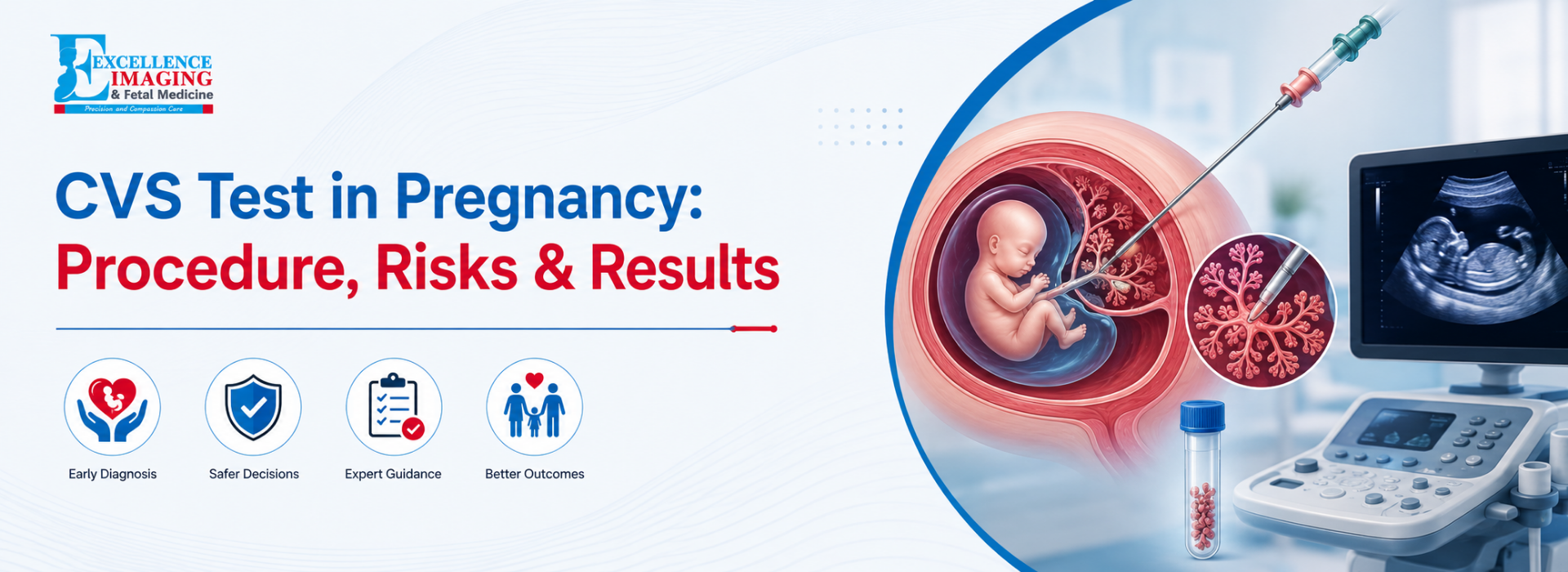
The CVS test, or Chorionic Villus Sampling, is a prenatal diagnostic test performed during early pregnancy. It involves gently collecting a small sample of cells from the placenta — the organ that connects you to your baby and delivers oxygen along with all the nutrients needed for growth.
These placental cells share the exact same genetic blueprint as your baby. By examining them in a lab, doctors can study the baby's chromosomes — detailed instruction books packed with genes that guide how the baby develops, from physical features to organ function. Humans usually have 46 chromosomes (23 pairs, half from each parent).
The test checks for any extra, missing, or damaged chromosomes that could affect the baby's health. Because it analyzes actual cells rather than just estimating risk, CVS gives clear, reliable answers that screening blood tests or ultrasounds cannot always provide.
What Does CVS Test For in Pregnancy?
The CVS genetic test helps identify specific chromosome conditions with high certainty. It is different from screening tests that only show risk levels — this test gives clear diagnostic answers.
Doctors commonly use it to check for:
- Down syndrome (Trisomy 21)
- Edwards syndrome (Trisomy 18)
- Patau syndrome (Trisomy 13)
It can also detect certain inherited disorders like cystic fibrosis or sickle cell disease when family history suggests higher risk.
When Is CVS Test Done in Pregnancy?
The CVS test is typically performed between 10 and 13 weeks of gestation (the period between conception and birth). This early timing gives families more time to understand results and plan the next step.
Your doctor might suggest CVS if you are 35 years or older, since the chance of chromosomal issues naturally increases with age. Other common reasons include a family history of genetic conditions or abnormal results from earlier screenings like NIPT.
What Is a Chorionic Villus Sampling Procedure?
The chorionic villus sampling procedure uses continuous ultrasound guidance for safety and precision. We begin every appointment with a detailed ultrasound to confirm your baby's heartbeat and check the exact position of the placenta. The entire appointment usually lasts 30 to 45 minutes.
There are two common methods, and your specialist chooses the safest one based on placenta location:
- Transabdominal CVS: After cleaning the skin on your lower belly with an antiseptic, the doctor may apply a local numbing medicine. A thin needle is then carefully guided through the abdomen and into the placenta to collect a tiny sample of cells. You might feel pressure or brief cramping as the needle passes through, similar to a blood draw but deeper.
- Transcervical CVS: The doctor first cleans the area and may use a speculum to get a clear view. A thin, flexible tube is then gently passed through the vagina and cervix to reach the placenta, and cells are collected through light suction. Many women describe this as mild cramping or a brief twinge, much like menstrual discomfort.
The sample taken is very small and does not harm the placenta or the baby.
Precautions to Be Taken After CVS Test
After the procedure, most women resume normal activities within a day or two. Following these precautions supports a smooth recovery:
- Rest for the remainder of the day
- Avoid heavy lifting and strenuous exercise for 24–48 hours
- Watch for warning signs like heavy bleeding, severe pain, fever, or fluid leakage
- Follow up with your doctor as scheduled
How Accurate Is CVS Pregnancy Test?
The CVS pregnancy test is highly accurate — around 99% for the chromosome conditions it checks. Preliminary results often arrive within a few days, and full results typically come within 7 to 14 days.
A normal result is reassuring, but it does not guarantee a completely healthy baby. The test does not detect every possible birth defect, such as neural tube defects.
What Do the Results Mean?
CVS results are usually available within two weeks.
- Normal result — The tested chromosomes appear typical, which brings significant peace of mind for many parents.
- Abnormal result — This indicates a chromosomal or genetic condition. Your doctor explains the finding in detail and arranges genetic counseling, with full support to help you understand your options.
- Unclear result — In rare cases, a follow-up test like amniocentesis may be suggested for further confirmation.
You are never left alone to interpret the information — our team reviews every report with you in plain, parent-friendly language.
CVS Test Cost in Delhi
The CVS test cost in Delhi varies based on the clinic and the type of genetic analysis needed. For an exact, prescription-based quote, we recommend speaking with our team directly.
How to get the exact cost:
- Call us at +91 70425 66652 to ask for the package price based on your prescription.
- Visit us at B-3/174, Block B3, Janakpuri, New Delhi (open 24 hours) for a clear, printed breakdown of procedure and lab fees.
Book your CVS test consultation at Excellence Imaging today.
Frequently Asked Questions (FAQs)
What does CVS test for in pregnancy?
It checks for chromosome abnormalities such as Down syndrome, along with certain inherited genetic disorders, especially when there is a family history or abnormal screening results.
Where can I find a clinic offering advanced prenatal screening services?
Excellence Imaging and Fetal Medicine in Janakpuri, Delhi, offers modern prenatal diagnostic services with experienced fetal medicine specialists.
Is CVS painful?
Most women feel mild to moderate cramping, similar to menstrual pain. The sensation is usually brief and manageable.
How early can a CVS test detect pregnancy issues?
It can give reliable diagnostic answers as early as 10 weeks of pregnancy.
What happens if a CVS test is positive?
A positive result means a specific chromosomal or genetic condition has been found. Your doctor will explain the results in detail, arrange genetic counseling, and help you understand all your options and available support.
The CVS test offers valuable clarity when important health questions arise in pregnancy. The decision is personal, and having complete information helps you move forward confidently.
Contact us if you have questions or want to discuss your options. Always consult your healthcare provider for personalized medical advice.